
Chastleton House, Oxfordshire
Conservation and Restoration of a Range of Historic Glass Types
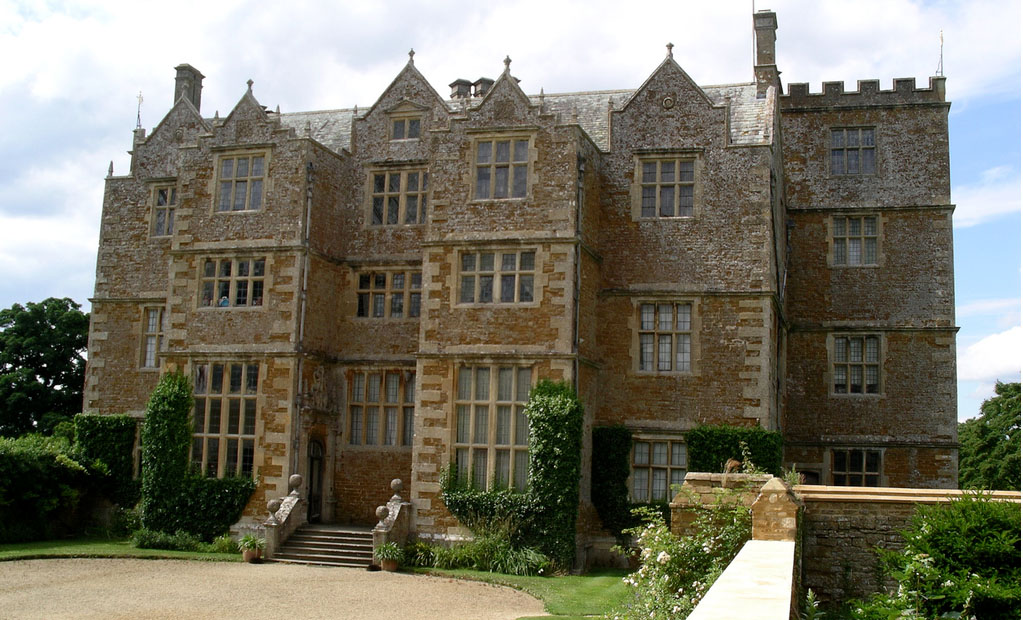
Chastleton House was built between 1607 and 1612 by a prosperous wool merchant, Walter Jones, as an impressive statement of wealth and power. Owned by the same increasingly impoverished family until 1991, the house remained unchanged for nearly 400 years until it was taken into the care of the National Trust in 1991. The National Trust then undertook a programme of conservation, rather than restoration, allowing future visitors to see the house essentially as it was when acquired (rather than being restored to its ‘original’ state).
With regard to the glazing, the conservation approach meant that every type of glass found in the property, original broad glass, cylinder glass and crown glass, was conserved or repaired as found, like for like, even though some of the glass dated from later repairs. Wherever possible, repairs and replacements had to be made using traditional methods and materials, exactly reproducing the original materials.
Wherever possible, if the glass panes were intact and mechanically held within their framework, the glass was epoxy resin bonded in situ; epoxy resins have a similar refractive index to glass, leaving the repaired cracks barely visible.
Where pieces were badly broken and replacement was necessary, each type of glass was carefully (and individually) matched from our wide range of ‘Barley Bent’ glasses.

Metal and wooden casements were repaired and restored using traditional materials; the lead calmes in leaded glazing were preserved where possible and replaced where necessary using specially produced calmes of matching profile. Windows were pointed in using traditional lime mortar mixed with animal hair and aggregates including soil from the garden, as would have been done when the house was first built.
In conserving the glazing of Chastleton House, Barley Studio were able to bring all of their knowledge and experience, both of historic glazing methods and materials and of conservation philosophy and practice, to the project, using traditional materials and methods to conserve a wide range of glazing types.
We use cookies on our website to give you the most relevant experience by remembering your preferences and repeat visits. By clicking “Accept All”, you consent to the use of ALL the cookies. However, you may visit "Cookie Settings" to provide a controlled consent.
Manage consent
Privacy Overview
This website uses cookies to improve your experience while you navigate through the website. Out of these, the cookies that are categorized as necessary are stored on your browser as they are essential for the working of basic functionalities of the website. We also use third-party cookies that help us analyze and understand how you use this website. These cookies will be stored in your browser only with your consent. You also have the option to opt-out of these cookies. But opting out of some of these cookies may affect your browsing experience.
Necessary cookies are absolutely essential for the website to function properly. These cookies ensure basic functionalities and security features of the website, anonymously.
| Cookie | Duration | Description |
|---|---|---|
| cookielawinfo-checkbox-analytics | 11 months | This cookie is set by GDPR Cookie Consent plugin. The cookie is used to store the user consent for the cookies in the category "Analytics". |
| cookielawinfo-checkbox-functional | 11 months | The cookie is set by GDPR cookie consent to record the user consent for the cookies in the category "Functional". |
| cookielawinfo-checkbox-necessary | 11 months | This cookie is set by GDPR Cookie Consent plugin. The cookies is used to store the user consent for the cookies in the category "Necessary". |
| cookielawinfo-checkbox-others | 11 months | This cookie is set by GDPR Cookie Consent plugin. The cookie is used to store the user consent for the cookies in the category "Other. |
| cookielawinfo-checkbox-performance | 11 months | This cookie is set by GDPR Cookie Consent plugin. The cookie is used to store the user consent for the cookies in the category "Performance". |
| viewed_cookie_policy | 11 months | The cookie is set by the GDPR Cookie Consent plugin and is used to store whether or not user has consented to the use of cookies. It does not store any personal data. |
Functional cookies help to perform certain functionalities like sharing the content of the website on social media platforms, collect feedbacks, and other third-party features.
Performance cookies are used to understand and analyze the key performance indexes of the website which helps in delivering a better user experience for the visitors.
Analytical cookies are used to understand how visitors interact with the website. These cookies help provide information on metrics the number of visitors, bounce rate, traffic source, etc.
Advertisement cookies are used to provide visitors with relevant ads and marketing campaigns. These cookies track visitors across websites and collect information to provide customized ads.
Other uncategorized cookies are those that are being analyzed and have not been classified into a category as yet.
Loading...
Loading...