
Environmental Protective Glazing f0r Endangered Stained Glass Windows
“The installation of a protective glazing system is a crucial part of the preventive conservation of architectural stained glass”
Corpus Vitrearum Guidelines for the Conservation and Restoration of Stained Glass, 2nd ed, 2004
Why Environmental Protection?
Our fragile heritage of stained glass is endangered through its exposure to atmospheric moisture in the form of rain and condensation. The presence of moisture encourages loss of painted detail, corrosion of medieval glass and biological growth such as moulds and algae, which hold moisture longer on the surface of the glass thus accelerating the rate of deterioration.
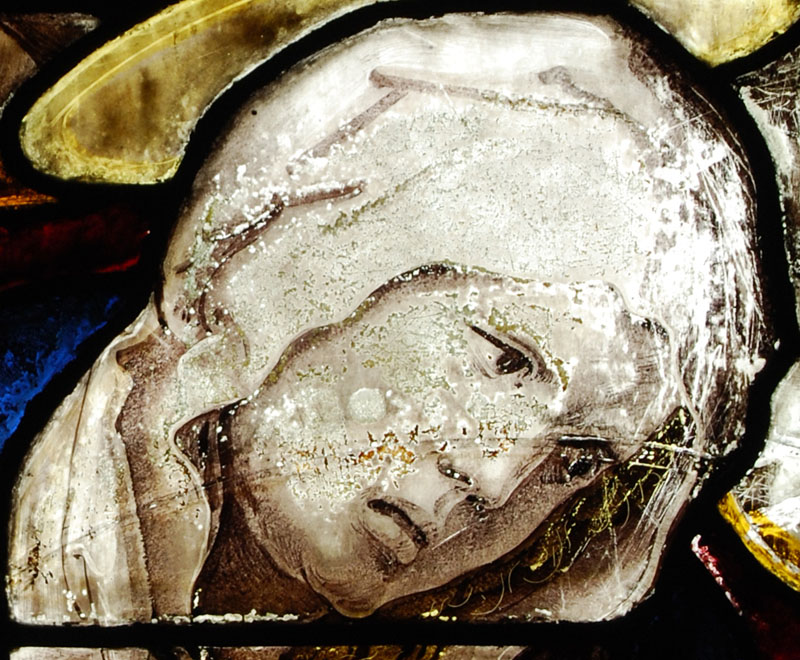
In transmitted light – damage to painted detail

In reflected light – corrosion of glass and paint
How does it work?
Internally ventilated environmental protective glazing (EPG) allows air from within a building to pass freely over both sides of the stained glass. The air, being of equal temperature on both sides, keeps the glass dry and in as near museum conditions as can be achieved within the architectural setting.
What are the benefits?
Relieved from their practical function of being a climatic barrier, the protected stained glass windows are displayed as works of art in EPG that significantly retards further deterioration.
Conservation treatments can be minimised, for example re-leading can often be avoided and the existing leadwork conserved.
Non-invasive treatments, such as cold painting to replace lost or faded painted detail, can be introduced to enhance the visual appearance.

Where can examples of our EPG systems be seen?
Keith Barley pioneered the use of EPG systems in the UK over 40 years ago, designing and installing site-specific systems to protect some of our country’s most prized historic glass. Keith’s passion for preserving our fragile heritage has resulted in these systems being adopted by leading cathedral glass conservation studios such as Canterbury, York and Lincoln as well as many independent studios throughout the country.
Environmental Protective Glazing systems installed by Barley Studio can be found in York Minster, Southwell Minster and Howden Minster; Lichfield Cathedral, Ely Cathedral and Durham Cathedral; stately homes such as Longleat House and Blickling Hall; and parish churches such as St Nicholas’, Stanford on Avon, Northamptonshire and St Mary’s, Fairford, Gloucestershire, that house some of the finest collections of medieval windows in the world. Internationally, Keith Barley has designed systems for The Museum of Fine Art, Boston and St Patrick’s Cathedral and The Metropolitan Museum, New York.
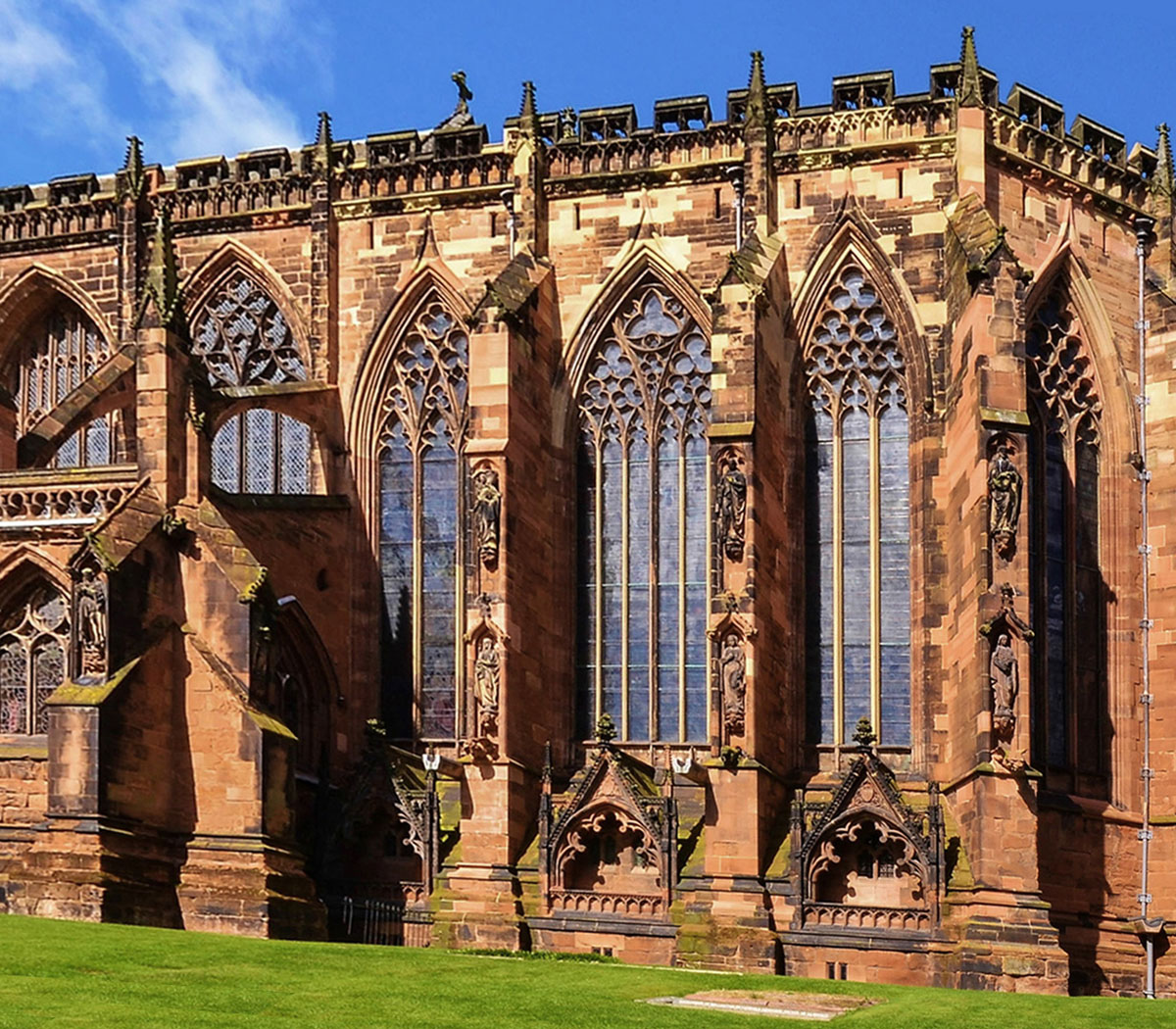
The Lady Chapel of Lichfield Cathedral, with Barley Studio’s Environmental Protective Glazing and Wire Guards
protecting the world-famous Herkenrode windows
We use cookies on our website to give you the most relevant experience by remembering your preferences and repeat visits. By clicking “Accept All”, you consent to the use of ALL the cookies. However, you may visit "Cookie Settings" to provide a controlled consent.
Manage consent
Privacy Overview
This website uses cookies to improve your experience while you navigate through the website. Out of these, the cookies that are categorized as necessary are stored on your browser as they are essential for the working of basic functionalities of the website. We also use third-party cookies that help us analyze and understand how you use this website. These cookies will be stored in your browser only with your consent. You also have the option to opt-out of these cookies. But opting out of some of these cookies may affect your browsing experience.
Necessary cookies are absolutely essential for the website to function properly. These cookies ensure basic functionalities and security features of the website, anonymously.
| Cookie | Duration | Description |
|---|---|---|
| cookielawinfo-checkbox-analytics | 11 months | This cookie is set by GDPR Cookie Consent plugin. The cookie is used to store the user consent for the cookies in the category "Analytics". |
| cookielawinfo-checkbox-functional | 11 months | The cookie is set by GDPR cookie consent to record the user consent for the cookies in the category "Functional". |
| cookielawinfo-checkbox-necessary | 11 months | This cookie is set by GDPR Cookie Consent plugin. The cookies is used to store the user consent for the cookies in the category "Necessary". |
| cookielawinfo-checkbox-others | 11 months | This cookie is set by GDPR Cookie Consent plugin. The cookie is used to store the user consent for the cookies in the category "Other. |
| cookielawinfo-checkbox-performance | 11 months | This cookie is set by GDPR Cookie Consent plugin. The cookie is used to store the user consent for the cookies in the category "Performance". |
| viewed_cookie_policy | 11 months | The cookie is set by the GDPR Cookie Consent plugin and is used to store whether or not user has consented to the use of cookies. It does not store any personal data. |
Functional cookies help to perform certain functionalities like sharing the content of the website on social media platforms, collect feedbacks, and other third-party features.
Performance cookies are used to understand and analyze the key performance indexes of the website which helps in delivering a better user experience for the visitors.
Analytical cookies are used to understand how visitors interact with the website. These cookies help provide information on metrics the number of visitors, bounce rate, traffic source, etc.
Advertisement cookies are used to provide visitors with relevant ads and marketing campaigns. These cookies track visitors across websites and collect information to provide customized ads.
Other uncategorized cookies are those that are being analyzed and have not been classified into a category as yet.
Loading...
Loading...